Theology Matters

Faith Virtue Knowledge


4 Comments

Give me revelation!

“Speak Lord, for thy servant heareth!”

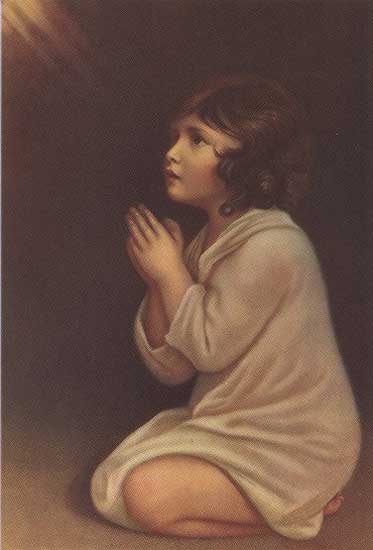
I was blessed to grow up in a family that loved and honoured the word of God. I vividly remember one evening as a small boy when my dad read to us the story of the call of Samuel. You remember? God begins to call Samuel by name, but Samuel does not recognize God’s voice and thinks it is Eli the priest calling to him. Three times he gets up and reports dutifully to Eli. And on the third time, the penny drops for the old man of God and he instructs the boy to return to his bed and listen. If the Lord should call again, then Samuel is to say (in the old King James that the story book my father was reading quoted): “Speak Lord, for thy servant heareth.”
Image

That night I went to bed feverishly excited. As I put my head on my own pillow, I began to repeat Samuel’s prayer over and over again. “Speak Lord, for thy servant heareth. . . (nothing). . . Speak Lord for they servant heareth. . .” I was disappointed as I went to sleep that night, but looking back on my life, I can see that God has been answering that simple prayer ever since.

Over 30 years later, my desire continues to know God’s word, to hear God’s voice, to experience revelation from God.

Don’t use the ‘R’ word

As a theologian, I’m not supposed to use that word. I am supposed to reserve it for speaking only about Creation, the Incarnation and the Bible. Theologians make a distinction between general revelation, that is, what can be known about God through creation and reason, and special revelation, God’s saving revelation through Christ and inspired Scripture. And a further distinction is made between ‘revelation’ and ‘illumination’—the personal apprehension of what God has already revealed (in creation and the Scriptures). They do this for a very good reason. People these days are not supposed to experience the sort of ‘revelation’ that results in the addition of another testament to the bible or the establishing of a new religion. Agreed. And yet, there are a couple of problems with a strict revelation/illumination divide.

First, the bible (as is so often the case) is not quite so accurate in its usage of the word ‘revelation’ as we theologians might wish. In 1 Corinthians 14, for example, the Corinthians are told to anticipate that ‘revelations’ will frequently occur in the context of church meetings:

What shall we say, brothers? When you come together, everyone has a hymn, or a word of instruction, a revelation, a tongue or an interpretation. All of these must be done for the strengthening of the church. (1 Cor 14:26)

It is astonishing that Paul allows for this even among the Corinthian Church—that disorderly, super-spiritual congregation with so many problems. But even here, the notion of ‘revelation’ is not excluded. Rather, it is merely regulated and made subject to the law of love and the necessity of order.

In another passage, Paul frankly admits that he prays earnestly and ceaselessly that the Ephesian believers would (if you’ll permit me) get a revelation of God’s love:

 I keep asking that the God of our Lord Jesus Christ, the glorious Father, may give you the Spirit of wisdom and revelation, so that you may know him better. (Eph 1:17)

Apparently, merely hearing the words is not sufficient. And unfortunately, the term ‘illumination’ does not really account for the immediacy and personal. . .ness that is being conveyed here. Its not as if we could know, and all we need is for the ‘light to go on’ as the word implies. The point is that in order to apprehend anything about God we need the revelation of the Holy Spirit, not a mere application of some already-written words to our lives.

And this brings me to the second problem. We cannot see unless our eyes are opened; we cannot hear unless our ears are opened; we cannot properly perceive or apprehend truth unless our mind and heart are opened. And this is the ongoing revelatory (there, I said it again) activity of the Holy Spirit. The Spirit is just as active in my reading of the Bible as he was in inspiring its authors. It is not mere ‘illumination’ as if God only spoke or revealed himself at certain times, and then stopped. When God said “Let there be light.” There was light. And there still is. That word that God spoke so long ago remains both spoken and speaking. The light is still shining. The sun still bears witness to its creator. It is the same with the words of Scripture—they continue to speak, every time that they are read or heard—and indeed with the Word incarnate. Jesus still lives and still speaks. God’s Word remains spoken and speaking. The problem is, not everybody actually listens.

Though everybody hears the voice of creation’s testimony as Romans 1 makes clear, we need revelation in order to apprehend its message. And this should not surprise us. The gospels make clear that while many heard Jesus’ voice during his earthly ministry, comparatively few understood his message; while many beheld his miracles, few apprehended his true identity.

In summary, we need revelation (not just illumination). Paul both prays for believers to experience it, and counsels them in its use to build one another up. This kind of ‘revelation’ is the “I get it!” moment. But, if I may to presume the popular usage of this term—and indeed its biblical usage—over against the theological category which the same word is used to designate, when I actually get something, that is because the Holy Spirit has chosen to reveal it to me at that moment in that way. It is because God loves me infinitely but also individually, and thus knows just how to get through to me. It is not simply because I am slower than others. But Paul’s usage also implies that the ‘revelation’ that I receive about God is not just for me. It has the potential to bless others also and for that reason should be shared.

To be clear, I am not advocating for any ‘revelation’ that would contradict what God has already revealed about himself through the Creation, His Son, and his Word (more on that in my next post). I am trying to rehabilitate the word in its scriptural usage, and share both my hunger and my expectation that God will indeed reveal himself to us.

More on Samuel’s experience next week.


3 Comments

Faith Seeking Understanding

As I mentioned in my last post, I have been reflecting on 2 Peter 1: 5–10. Since this blog is a new venture for me, I planned to spend a bit of time with this passage because it is a good introduction to where I am coming from. If you get this, and you like it, you will probably enjoy my posts. If you don’t or you disagree, I’m sure I’ll annoy you terribly.

For this very reason, make every effort to add to your faith virtue, and to virtue knowledge. . .”

 In my last post I focused particularly on the word ‘virtue’.  In this post, as promised, I want to look more closely at the order presented in this verse. I don’t yet know how far into these things most people read, so let me put this right up front: I think that all too often we get the order mixed up. It doesn’t say that we should add faith or virtue to knowledge, but that we should add knowledge to faith and virtue.

Believe so that you may understand

 The first way we get mixed up is when we want to subordinate faith to knowledge. There seems to exist the notion that only that which can be proven empirically is worth believing. But this totally ignores the fact that some things are not known cognitively as much as they are known intuitively. Faith does not always or necessarily mean being prepared to accept the ridiculous; nor does it mean being prepared to accept a proposition on less evidence. Rather it means being willing to accept something on a different kind of evidence. When Jesus appeared to his disciples after the resurrection, all believed except for Thomas. Thomas needed proof and demanded to be able to touch the nail marks. When he received this tangible proof, in fairness, he did believe. But Jesus commended the type of faith that believes without the proof that Thomas demanded. It wasn’t that Jesus was asking the disciples to believe without proof. But the proof that was sufficient for the other disciples was their trust in Jesus’ character and his words.

 I recall a number of years ago in a university group called Students for Christ, we had a young man coming along to our meetings who appeared to be close to making a decision to become a Christian. One night after a meeting he came to speak with me. I don’t remember his exact words, but he had reached the point where a ‘leap of faith’ was all that was separating him from beginning his walk with God. “I have so many questions,” he said. And he began to list them, one after the other. I was sorely tempted to begin answering them as best as I could, one by one. But this would have been a mistake. Luckily the Holy Spirit stopped me. I explained to the young man as best as I knew how, that his questions did have answers and that he would find them, but that he was far more likely to do so after he had decided to entrust his life to Christ. What I had said falteringly and in many words St. Augustine said in just a few: “Believe so that you may understand.” Anselm’s (more) famous dictum extends Augustine’s principle: “Faith seeking Understanding.”

 If we make our faith conditional upon having all of our questions answered, then it is not really the type of faith that Christ commended—a declaration of trust in his person leading to a fully surrendered life. That is why any attempt to make sense of life apart from the foundation of faith in God is doomed to failure. And that is why the pursuit of knowledge for its own sake, a knowledge that is devoid of faith and ambivalent to virtue, is ultimately futile.

 Practice what you preach

A second mistake that we make is elevating knowledge at the expense of virtue. Did you ever hear a kid in primary school come out with “Don’t you even know that?!” Perhaps you remember saying it (I think we all have). Ever since Eden, knowledge has been a kind of currency. Knowledge is power, as the saying goes. But what is the usual response to the primary school classic? “Yeah. . . of course I do. . .” the child is tempted to lie because they would rather have knowledge than virtue.

The trouble is that the elevation of knowledge—dare I say, the worship of the intellect—often leads to overstating what is or what can be known. Call me post-modern, but I have played the academic game long enough to suspect that way too many claims that begin with “We now know that. . .” are just such overstatements—a stubborn refusal to admit that the intellect too is damaged by the Fall. But isn’t it interesting to note what is damaged first? Faith in God’s character (“Did God really say?”) followed by the virtue of obedience. Adam and Eve gained knowledge, true enough, but the knowledge that they tripped over faith and virtue to gain was only partial and was now the knowledge of a world that had been broken by their Sin. Our very capacity to know truly is directly affected by our obedient faith.

I am not saying that we should not seek knowledge. We should. In fact the very point of 2 Peter 1:5 is that we should strive to attain knowledge. I’m just saying that we should put knowledge in its proper place—behind faith and virtue.  Because, while faith without works is dead, knowledge without virtue simply ‘puffs up’ rather than ‘builds up’ (1 Cor 8:1).


3 Comments

For goodness sake, make an effort!

2 Peter 1:5 “For this very reason, make every effort to add to your faith, goodness, and to goodness knowledge. . .”

Several weeks ago a leader in our church challenged the congregation to memorise the first part of 2 Peter 1. Ever since that time, I have been reflecting on the above verse. Three questions have been foremost in my mind. The first two, I’ll deal with in this post. The third, I’ll save for next week. Here are the questions:

1. What on earth does ‘goodness’ mean?

2. If we are saved by grace, why is ‘every effort’ necessary?

3. What significance might there be in the order of these three (and the rest of the list in verses 6 and 7)?

What is goodness?

When I was in school, ‘good’ was one of those adjectives like ‘nice’ that carried little meaning because it was so vague. (Actually, this is not the case in the US, where it is a much more precise adjective which, when used of food, means something like ‘very delicious’). But upon closer investigation, I found that the word translated ‘goodness’ (arete) would be better translated ‘virtue.’ All of a sudden it began to make sense. Human Virtue broadly speaking is the skill of living rightly acquired by practice over time. Traditionally it has been broken down into a number of individual ‘virtues’: charity (selfless love), chastity (sexual purity: marital fidelity or abstinence), temperance (self control and moderation), diligence, patience, humility and kindness. Essentially it boils down to the practiced instinct of doing the right thing at the right time in the right situation for the right reason. When used of God, virtue refers to His essential Goodness (that word again, but it doesn’t seem as vague when used of Him). Thus our virtue is always derivative. He is the ultimate Good. Here in 2 Peter 1, the exhortation to virtue in verse 5 is on the basis of God’s virtue in verse 3.

“His divine power has given us everything we need for life and godliness through our knowledge of him who called us by his own glory and goodness (virtue)….For this very reason, make every effort…

And that kind of brings me to my next question.

Make every effort!

Why is it that if we are saved by grace apart from works, we are exhorted here to make every effort to add virtue to our faith, knowledge to our virtue and so on? That sure sounds a lot like work to me. Well it is. I said before that virtue can be understood as a skill that is acquired by practice over time. Like any skill. If you want to learn to play the piano, or train to win a marathon, or acquire any other skill worth having, you need to practice. You can’t play the piano ‘by grace’ (however gracefully you may play). That takes practice. Nor can you become a champion athlete by grace. You must practice.  But it needs to be said that virtue, properly understood, no more equates to merit than practice of the sort that is necessary to acquire it equates to ‘work’. Virtue does not save. We are not considered righteous before God on the basis of our goodness, but on the basis of Christ’s. Neither can we make ourselves good or virtuous by our own effort apart from the Holy Spirit.

But then again, a young person cannot make themselves a champion athlete either without some kind of inspiration; some kind of belief that deep down inside, that is what they really are. This is why we hear sports people talk so much about self-belief. It is that belief in the end goal, of realising their full potential—who they know that they are on the inside but are yet to be in fullness—that gets an athlete out of bed at 4.30 in the morning to train. And here is the point. When we receive salvation, we receive it free and its effects are total. What remains however is our physical flesh, the habits of a lifetime, the well established thought patterns of our mind. And yet when we receive salvation, we are declared to be a new creation, God’s child. This is the new and glorious reality, and yet while the possession of our new identity happens in a moment, the realisation of its fullness takes time…and, dare I say it, effort. It is not that we strive from this starting point to become worthy of a title we do not deserve. Rather we strive to cooperate with the Holy Spirit; to live as the children of God that we already are.

Here’s a simple example. Why do we as Christians read the bible? Is it because we are trying to earn our salvation by doing things that we think will be pleasing to God? Well, I admit, many do. But that just isn’t sustainable. The sense of obligation is suffocating as the experience of many would testify. No, when we read the bible, we read it as children seeking to understand their Father better. Because the more we understand Him, the more we understand who we are, and the more we understand who we are the more we are motivated to live accordingly.

We don’t work to please God. We don’t work to earn our position with Him. But when we actually get a revelation of the position that we already have, as his sons and daughters, we are freed to do the work for which we were made. And we strive, not to be found worthy, but to develop our potential as God’s children, to grow in the virtue that is ours by (new) birth.

For this reason, make every effort to add to your faith, virtue. Or, in the words of my title, for goodness sake, make an effort!


8 Comments

Faith, Faithfulness and Reward

Faith and Faithfulness:

Hebrews 11:6 tells us that ‘without faith it is impossible to please God because the one who comes to God must believe that he is, and that he is a rewarder of those who earnestly seek him.” Interestingly, the word which is translated faith here (pistis), can equally be translated faithfulness. And though the two words faith and faithfulness are obviously related in English (as in Greek), we often tend to think of the notion of ‘faith’ as mere intellectual assent to a set of propositions, which is divorced from ‘action’ consistent with that belief (faithfulness).

The Bible speaks of God himself as being faithful (pistos). When we say that God is faithful, we mean that we can trust God because God always acts according to his word. He is not capricious. But when the bible speaks of humans being faithful, it does so (apparently to us at least) in two distinct ways. It speaks of ‘the faithful’ to refer to people who believe, but it also speaks of individuals being faithful in the sense of being trustworthy, loyal or dependable. I would like to suggest that these two senses, distinct though they may be are not as separate as they seem. Jesus was faithful (dependable, loyal etc) because of what he believed (pisteueo, the verbal form of pistis) about his father. Likewise the things that we truly believe are the things that we live out in our daily lives whether we like it or not.

Integrated Faith

If we are to live lives that are pleasing to God then, we need an integrated faith that encompasses both sides of the Heb 11:6 coin, as it were. James speaks of a type of faith that is disintegrated; where belief is divorced from action. The demons believe in God, but do not please him. In order to please God one must believe first that God exists, but also secondly that God is the type of person who rewards the pursuit of himself. The implication is clear. It is possible to believe in God but not be pleasing to him because we do not seek him. This is the type of faith that James says the demons have, dead disintegrated impotent passive, in a word faithless (as opposed to faithful) belief. If one does not actively, diligently, earnestly seek God, then it is clear that one does not really believe God. One has no faith.

Faith and Reward

To truly believe (in this holistic sense) that there is a God (one side of the ‘coin’ if you will) changes everything! Nothing is necessarily what it seems to the human senses and perceptions. If there is a God, then there is also an unseen Spiritual world, more real than the physical one and more important, to which the physical world itself may be said only to roughly and incompletely correspond. If there is a God, there is an eternity and we may live for things beyond this present life. Stuff does not have to make sense in this life. If there is a God, then there is a judgment, and sin matters. If there is a God, people created in his image matter. Compassion matters. Mercy has meaning. If there is one who rewards (the other side of the coin), and rewards what is done in secret (which we learn from the sermon on the mount), then what is done in secret matters—and matters more in fact that what is done in the open. God sees what is done in secret and rewards accordingly. If God is a rewarder of those who earnestly and diligently seek him, then it is surely worthwhile to earnestly and diligently seek him. And yet we cannot be said to truly believe this unless we act accordingly—that is unless we actually do earnestly and diligently seek him. Because if we truly have faith in that proposition; if we truly believe it, this faith will be evidenced in our faithfulness to it, this belief evidenced in our daily life.

The Rewarder and the Reward

I say all this for two reasons. The first is to make the point that faith matters. What we believe about God matters. That is to say, theology matters. The second is this. Faithfulness matters. My point here is not to search for yet another excuse to condemn ourselves for not having the type of devotional life that we feel we ought to—most Christians think that they ought to pray more, or study the bible more; in short lead a more consistent Christian life—rather I hope to fundamentally reorient this feeling of ought. The point is not that I ought to pray more, but rather that the God that exists is a God that can be known, and hence that prayer is real. Here is the compelling truth about the God we serve. He wants to be sought. He yearns to be found. He desires to reveal himself. This is surely the reward for those who seek—nothing less than intimate access to God’s own heart.


6 Comments

Theology and Experience

My Experience

Several years ago, when I made the decision to leave a job in pastoral ministry to do further training in theology I came up against a common obstacle—particularly common, I might say, in the Pentecostal-Charismatic/non-denom world that I inhabit. Several people questioned (quite sincerely) the wisdom of doing a formal program of study at all. And there was good reason for it. Had we not all witnessed many young people who had once been so zealous for God that they had taken that fateful decision to go to Bible college? And had we not also witnessed these same zealous ones becoming jaded and cynical, losing their ‘edge’, and sometimes losing their faith? Why would anyone want to study theology? The sentiment was most succinctly, and perhaps best put by a good friend who simply said, “The world doesn’t need more theologians, Clayton.” In a sense of course, he was right. The world does not need more stuffy scholars who care little for God or people, and who know how to articulate a faith with great precision that they have long since ceased to experience if they ever did. (My own experience in Christian higher education leads me to believe that very few such people exist and that this is an unfair caracaturisation by which sincere and good people permit themselves to stunt their own spiritual growth…but that is another story for another day).

The (Imagined) Gulf Between Theology and Experience

The fact is that a gulf exists—or at any rate is held to exist—between theology and experience. Those who have wonderful experiences of God often fear that the pursuit of theological learning will somehow nullify these (though they are often curiously blind to the role that theology itself has had in creating and fostering these experiences), or perhaps, deep down, that they will find that some of their experiences are either false or feigned. On the other hand, those who pride (I use that word advisedly) themselves on having good theology can often be dubious about the subjective nature of ‘experiences’ of God, perhaps fearing deep down that if tangibly experienced, God may ‘mess with their categories’ or they may lose control.

C.S. Lewis (in Mere Christianity Book 4, Chapter 1) tells the story of a talk he gave to airforce servicemen. After he had finished, an old officer approached him and began to protest that he did not need theology, for he had the real thing—an experience of God. Lewis’ reflections on this experience provides some valuable clarity on this issue. As such, I will quote him here at length beginning with the words of the ‘hard-bitten’ officer:

‘I’ve no use for all that stuff. But, mind you, I’m a religious man too. I know there’s a God. I’ve felt Him: out alone in the desert at night: the tremendous mystery. And that’s just why I don’t believe all your neat little dogmas and formulas about Him. To anyone who’s met the real thing they all seem so petty and pedantic and unreal!’

Now in a sense I quite agreed with that man. I think he had probably had a real experience of God in the desert. And when he turned from that experience to the Christian creeds, I think he really was turning from something real to something less real. In the same way, if a man has once looked at the Atlantic from the beach, and then goes and looks at a map of the Atlantic, he also will be turning from something real to something less real: turning from real waves to a bit of coloured paper. But here comes the point. The map is admittedly only coloured paper, but there are two things that you have to remember about it. In the first place, it is based on what hundreds and thousands of people have found out by sailing the real Atlantic. In that way it has behind it masses of experience just as real as the one you could have from the beach; only, while yours would be a single glimpse the map fits all those different experiences together. In the second place, if you want to go anywhere, the map is absolutely necessary. As long as you are content with walks on the beach, your own glimpses are far more fun than looking at a map. But the map is going to be more use than walks on the beach if you want to get to America….

In other words, Theology is practical: especially now. In the old days when there was less education and discussion, perhaps it was possible to get on with a very few simple ideas about God. But it is not so now. Everyone reads, everyone hears things discussed. Consequently, if you do not listen to Theology, that will not mean that you have no ideas about God. It will mean that you have a lot of wrong ones—bad, muddled, out-of-date ideas. For a great many of the ideas about God which are trotted out as novelties today are simply the ones which real Theologians tried centuries ago and rejected. To believe in the popular religion of modern England [or, we may now say, of the modern USA or modern Australia] is retrogression—like believing the earth is flat.

The Community of Living Faith: The Integration of Theology and Experience in the Church

An intellectual faith that has no basis in lived experience is really no faith at all. On the other hand the enthusiasm of a person who starts out with a vibrant experiential faith will inevitably wane unless they, in the words of 2 Pet 1:5 “make every effort to add to [their] faith virtue [that is, the lived experience of that faith]; and to virtue, knowledge…”.

And so, when it comes to theology and experience you cannot have one without the other. But I will go one step further than that. We will typically find that we have a natural bent to emphasise one over the other. The one who defaults to a more rational and analytical faith will find that God challenges them—yes, I said GOD, though he might use those raving fanatics that they have always feared becoming—to grow in the area of their experience of the faith. Conversely, the one who defaults to a more affective faith should not be surprised to find God—not the devil—challenge them to grow in the area of their knowledge.

Not only do we need both theology and experience to be healthy and balanced individual Christians then, but, more importantly in the Church, we need each other. And my highest priority in this regard should not be to do everything possible to ensure that those unlike me learn from me—the comfortable and easy thing—but rather to humbly, submittedly, and intentionally allow myself to be shaped by those who are not like me, but whom nevertheless, God has called me to walk with. This is neither easy, nor comfortable. But it is vital.

Now one final point. The watching world, to whom we as Christians bear witness, like the church, consists of all types. Some come with the questions of the mind, others with the questions of the heart, but deep down, all alike give expression to the hunger of the soul that can only be satisfied by the God who put it there. Whether we are testifying with tears, grappling with the Scriptures, praying for a miracle, or engaging the skeptic, we are bearing faithful witness to the Only One who can truly satisfy the soul: The God who is, the God who can be known, the God who yearns to be experienced, and the God whose mysteries are beyond all searching out.

So do we need more theologians? Or more evangelists? Do we need more knowledge or more experience? The answer of course, is yes.